Summary
I am a statistician working with the free citizen science site (Microbiome Prescription) which have several thousand annotated samples from BiomeSight and Ombre. There are a lot more Biomesight samples than Ombre so they are the preferred microbiome test company (Discount code: MICRO).
Recently I have been exploring Ranged Odds Ratio with good results. These results have been combined with a simpler presentation of interventions.
What are Ranged Odds Ratio? Think of bacteria as producing food for the body, we know of 20,000 different types of food (called Metabolites). As with human diet, too much of one food and too little of another can cause health issues. Ranged Odds Ratio means finding the range of each food that makes someone an athlete or a invalid. We have to consider all of the components holistically.
Odds indicate risk. Smoking increases the risk of lung cancer — it does not mean you will get it.

Often I see a result like values below the median (the 50%ile) increases or decreases the odds for a symptom. It is contrary to common microbiome legend that if you are between 5%ile and 95%ile, you are healthy. The Criteria of P < 0.001 for including a bacteria.
Goal
- Accurate prediction based on a microbiome sample of a symptom/condition
- Determines which bacteria are significant and whether to increase or decrease
- Determine which interventions increases or decreases each bacteria
- Ideally filter to interventions that are only positive
Case Studies: Prediction
Below I show some sample results for people reporting Mast Cell Activation Syndrome, with the count of bacteria identified as being very significant for each. The top examples are people who has done formal testing with specialist to get an official diagnosis (including identifying which subset).
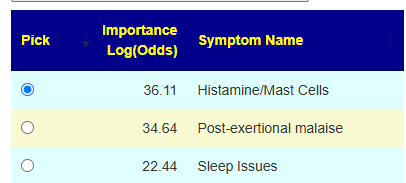
32 bacteria
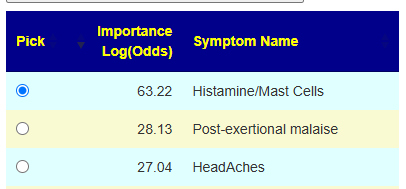
47 bacteria
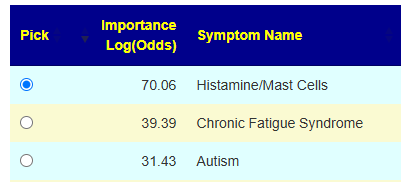
46 bacteria
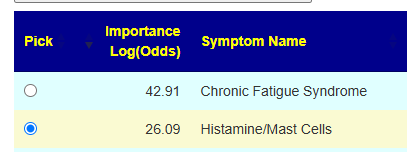
32 bacteria
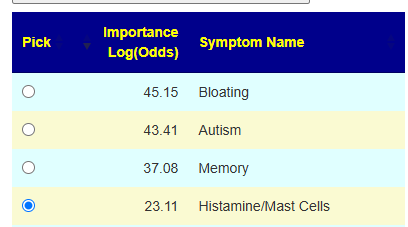
30 Bacteria identified
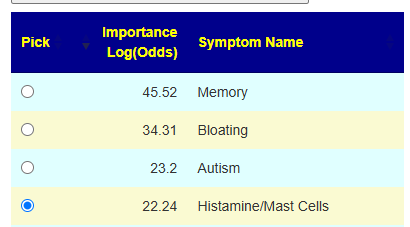
33 Bacteria identified
Bacteria Identified
Often the bacteria changed is obvious, you are at 100%ile (highest value) and thus should decrease. For other bacteria, you are at 53%ile (very common value) and also should decrease it.

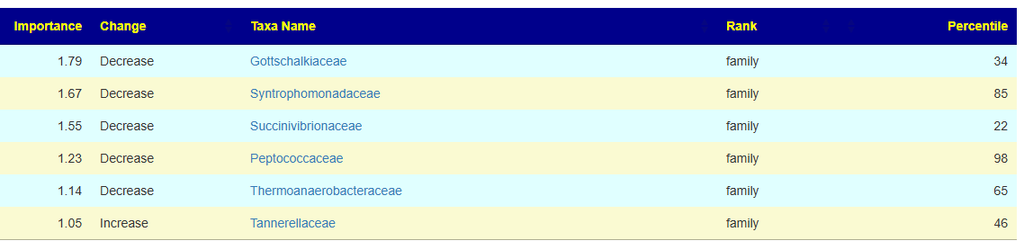
The Suggestions Vary according to Bacteria
Above we identified which bacteria and
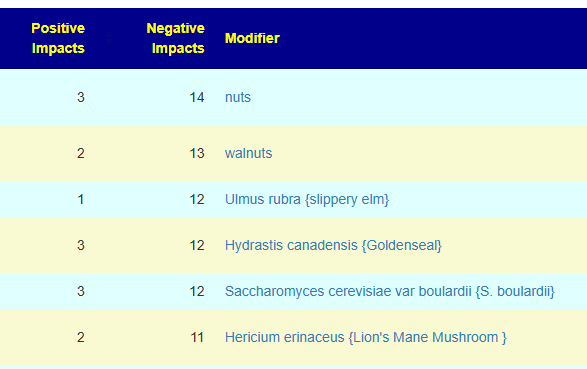
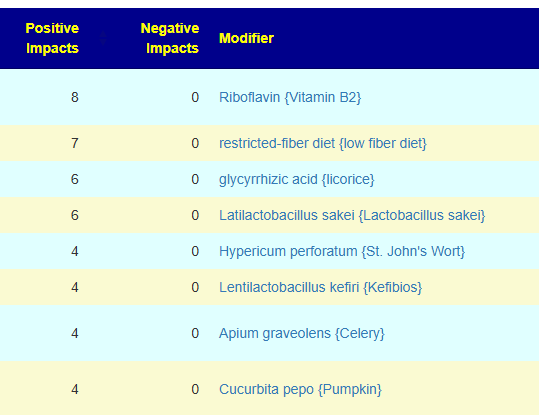
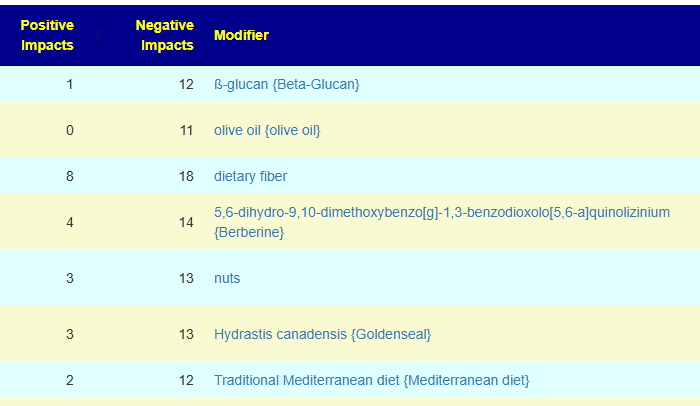
Items to take and to avoid are shown with the number of bacteria that they are likely to impact according to data derived from published studies.
Sample 1
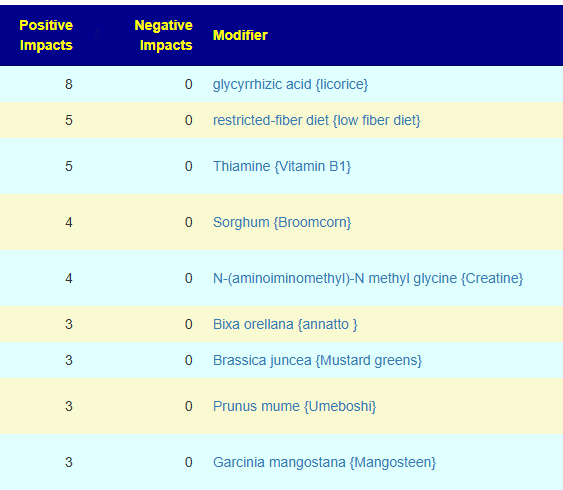
Sample #2
Summary
The YouTube below does a complete walkthrough from getting results on Biomesight to getting interventions.
Recent Comments