Today, I got this message on Facebook from some one who got relief for Anhedonia from advice on Microbiome Prescription.
Anhedonia is the diminished ability or loss of interest in experiencing pleasure from activities once enjoyed, feeling emotionally flat, numb, or empty, and it’s a core symptom of depression, schizophrenia, substance use disorders, PTSD, and Parkinson’s
Hi Ken, I’ve taken Enterococcus Faecium Probiotic Powder (Dopamine Support) from Bulkprobiotics for 2 weeks and it has made me laugh at things (which I’ve been unable to do since having anhedonia) but when I stopped the laughter also stopped. How can I make this probiotic stay more permanently in my system? What do I feed it?
To answer that question, we need to look at literally four paths of suggestions. This pattern applies to mono-bacteria requests. The paths are:
- Use the association “R2” site based on data from PrecisionBiome.eu to see if any probiotics are known to increase /feed/ it.
- Use the associations based on data from Biomesight.com to see if any probiotics are known to increase /feed/ it. This sits on my local server only at present. It’s a fat database.
- Use the literature from Pub Med
- Use data on what it consumes according to the KEGG: Kyoto Encyclopedia of Genes and Genomes
So what we find:
Association “R2” site
Doing a search, we link to this page. And then need to sort by “Probiotic” and then “R2” to see which probiotics have the greatest impact. We double click the “R2” to have the highest values first.
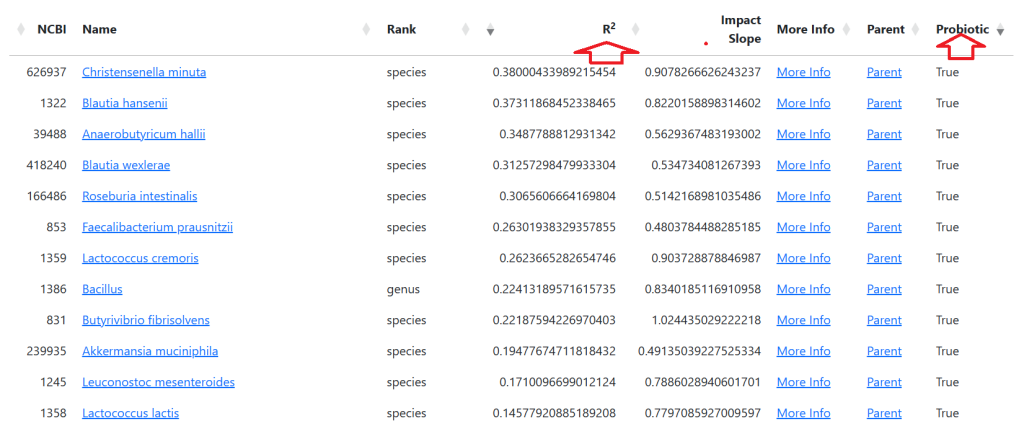
Not all of these probiotics are currently available retail in every country. The most likely to be available are listed on this page. Search by name for providers:
- Lactococcus cremoris: Not available in isolation. Swedish Filmjölk (SE) / Filmjölk would be my first choice.
- Akkermansia muciniphila is available as a single species (Pendulum / akkermansia muciniphila) or in mixtures
- Leuconostoc mesenteroides is available as a single species. Bulk Probiotics / Leuconostoc Mesenteroides Probiotic Powder
- Lactococcus lactis is available as a single species: Lactococcus lactis Bulk Probiotics
- Levilactobacillus brevis is available as a single species: Bulk Probiotics / L. Brevis Probiotic Powder
- Streptococcus thermophilus is available as a single species: CustomProbiotics.com / S. Thermophilus Probiotic Powder
Biomesight R2 Database
The numbers are below. Lactobacillus Johnsonii really stands out and is available as a single species from three sources:
- Bulk Probiotics / L. Johnsonii Probiotic Powder
- Maple Life Science™ / Lactobacillus Johnsonii
- Reduz melasma / Lactobacillus Johnsonii
| Species Name | R2 |
| Lactobacillus Johnsonii | 0.849 |
| lactobacillus casei | 0.378 |
| Lactobacillus parakefir | 0.295 |
| enterococcus durans | 0.270 |
| lactobacillus paracasei | 0.261 |
| clostridium butyricum | 0.252 |
| Streptococcus faecalis (Enterococcus faecalis) | 0.228 |
| Lactococcus (Lc.) lactis | 0.222 |
| enterococcus durans | 0.204 |
| bifidobacterium breve | 0.194 |
| lactobacillus rhamnosus | 0.143 |
| Mutaflor (E.Coli Nissle 1917) | 0.133 |
Pub Med Literature
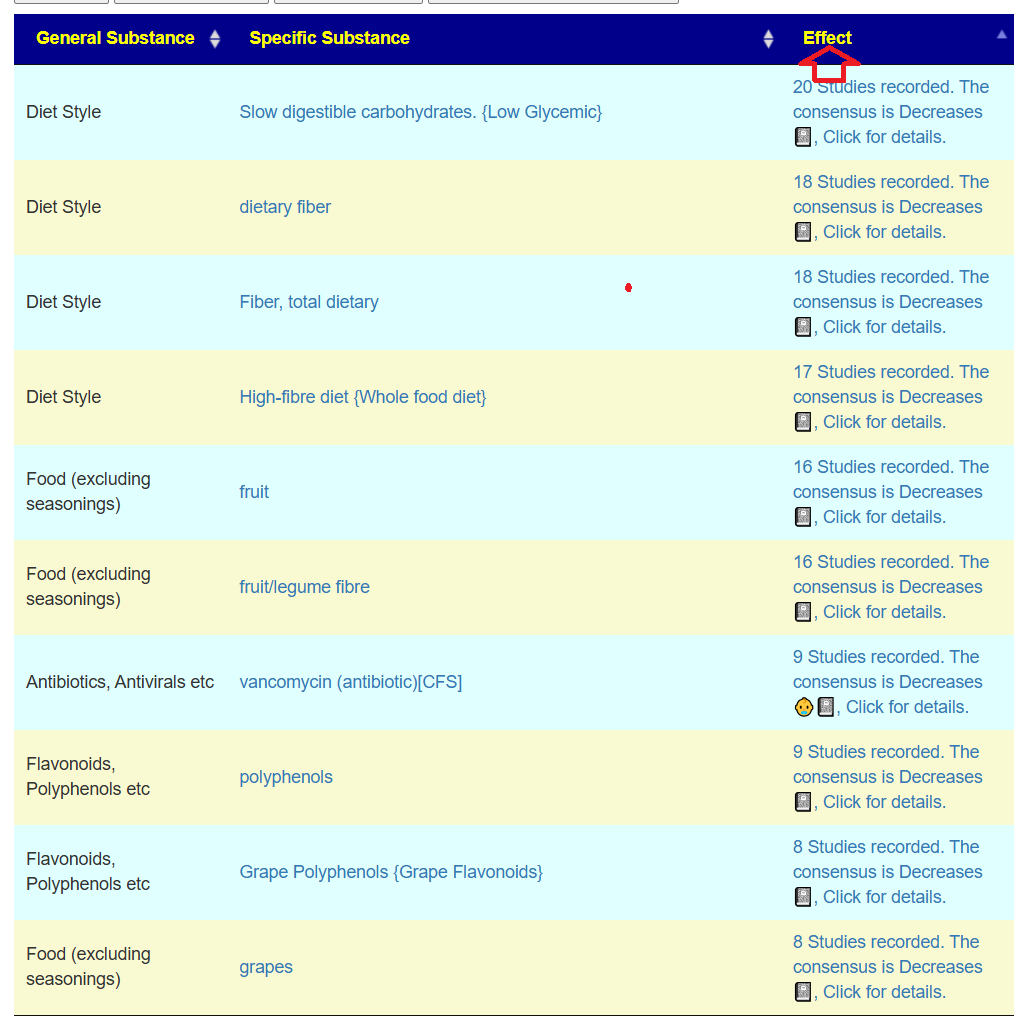
Search for bacteria here, takes us to this page. Here we are not dealing solely with probiotics but everything. Clicking on effect to see what has the most evidence/studies, we see most studies report on items that decrease, i.e. your avoids.
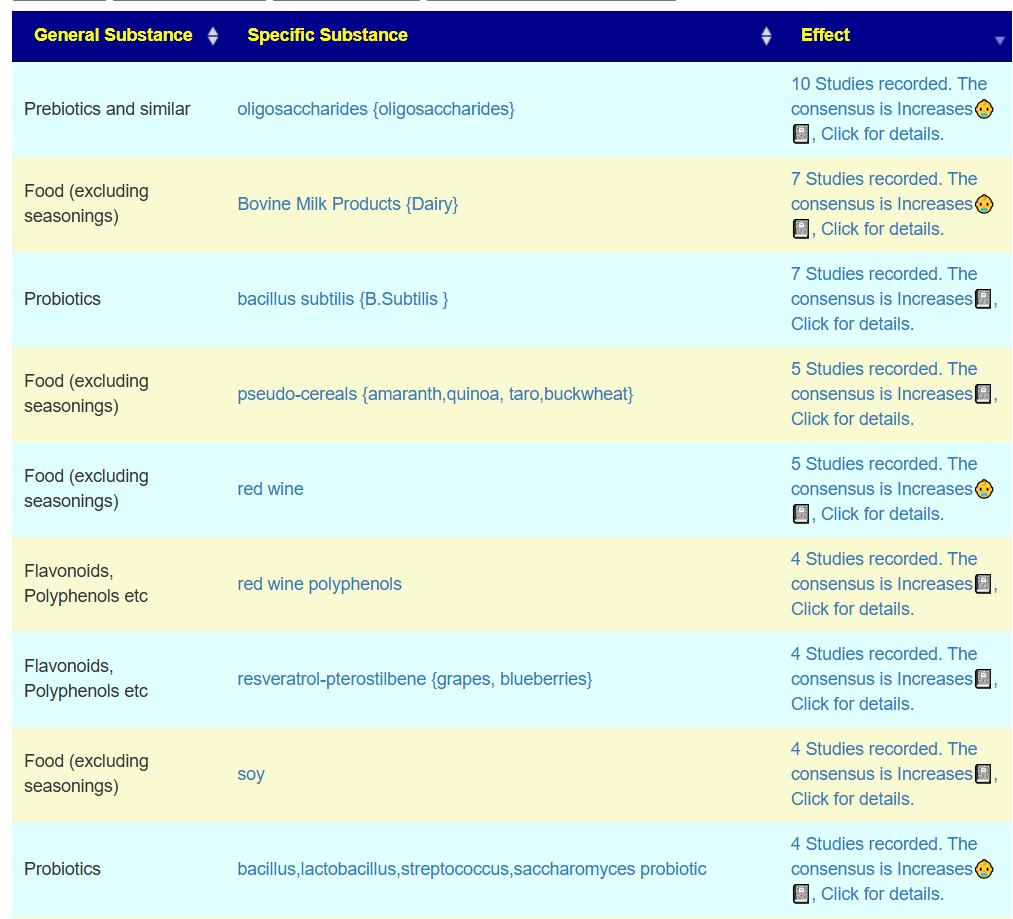
Putting “increases” in the search box, we then see this list of items (I leave the rest to you)
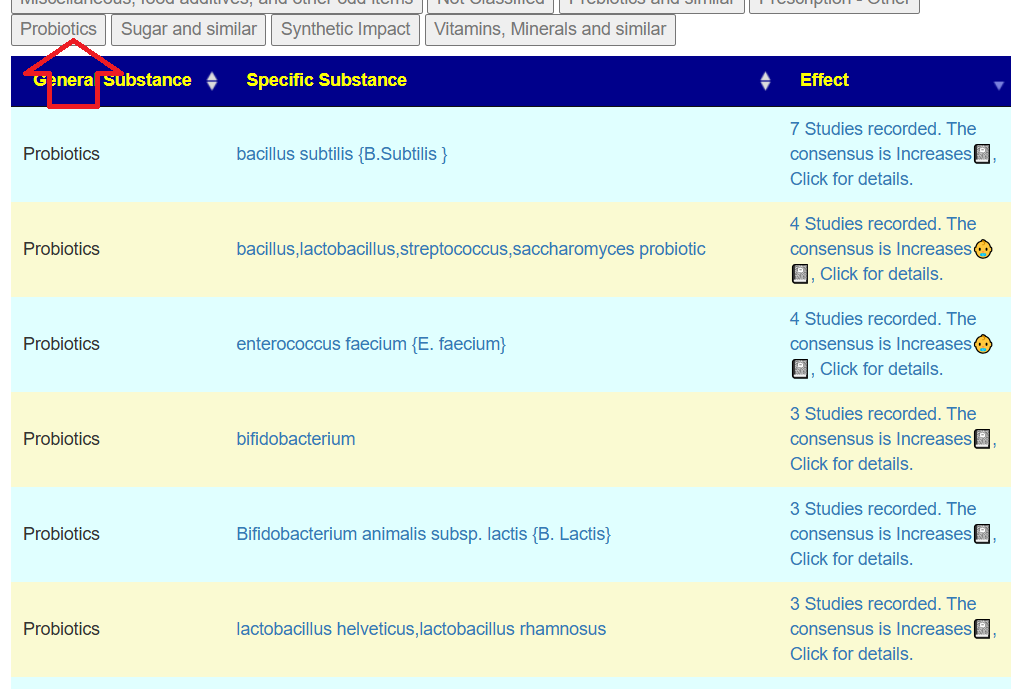
Lastly, we click on probiotics to see that list. NOTE: PubMed does not evaluate relative impact (R2 does). We are measuring only the confidence (via number of studies) that it will do some impact.
KEGG: Kyoto Encyclopedia of Genes and Genomes
This a little more obtuse, we are looking for supplements that may be consumed by this bacteria. To get there, you need to login and then change display level to Advance.

Then go to ???️ Species x (Produces,Consumes,Enzymes and search for the desired bacteria.
We see that it consumes 345 different substances. We are going to just scan those for items available as supplements.

Clicking on the Produces, we get the page below which we can sort by how much is consumed of each.
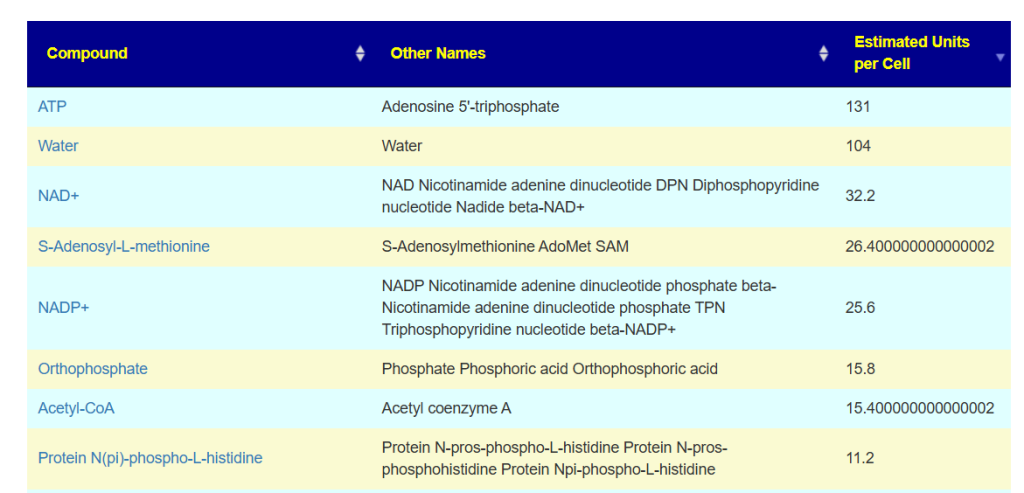
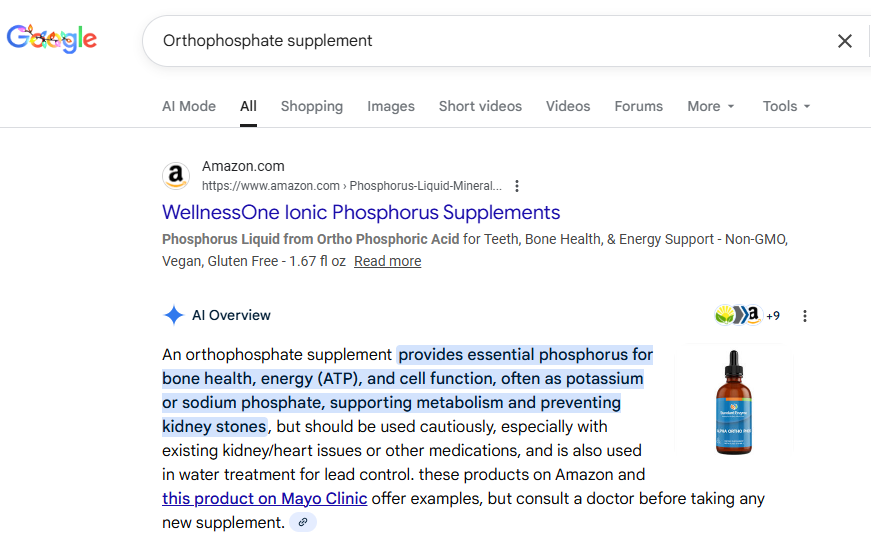
I found several that are available as supplements by just copying and add “supplement” and do a web search.
Example:
Summary
My personal approach would be:
- Continue taking Enterococcus Faecium Probiotic Powder, reducing it until you find the minimum dosage for a positive effect.
- Try each of the following for 2 weeks each (keeping the above) and see if they have effects. One at a time, we want to see what works best for you.
- Lactobacillus Johnsonii
- Akkermansia muciniphila
- Leuconostoc mesenteroides
- Mesenteroides Probiotic Powder
- Lactococcus lactis
- Modify your diet to remove the foods with significant evidence of inhibiting Enterococcus Faecium
Bonus
I took your last sample through the condition Odds Ratio algorithm that I am working on with the following results. I was surprised/delighted that every positive prediction agreed with your reported symptoms. In time, this will evolve into better suggestions because of better identification of the key bacteria involved.
| SymptomName | Strength | HasSymptom |
| Immune Manifestations: Bloating | 26.7 | 1 |
| Sleep: Unrefreshed sleep | 25.1 | 1 |
| Comorbid: High Anxiety | 23 | 1 |
| Neurocognitive: Problems remembering things | 21.8 | 1 |
| Neurocognitive: Difficulty paying attention for a long period of time | 21.2 | 1 |
| Immune Manifestations: Constipation | 21.1 | 1 |
| Autonomic Manifestations: irritable bowel syndrome | 21 | 1 |
| Sleep: Problems staying asleep | 20.1 | 1 |
| General: Depression | 19.6 | 1 |
| Neurocognitive: Unable to focus vision and/or attention | 19.4 | 1 |
| Sleep: Waking up early in the morning (e.g. 3 AM) | 19.3 | 1 |
| Official Diagnosis: Irritable Bowel Syndrome | 19 | 1 |
| Neurological-Audio: Tinnitus (ringing in ear) | 18.8 | 1 |
| Immune Manifestations: general malaise | 18.7 | 1 |
| Neurocognitive: Slowness of thought | 17.1 | 1 |
| Post-exertional malaise: Mentally tired after the slightest effort | 17 | 1 |
| DePaul University Fatigue Questionnaire : Impaired Memory & concentration | 16.7 | 1 |
| Immune Manifestations: Inflammation (General) | 16.1 | 1 |
| DePaul University Fatigue Questionnaire : Anxiety/tension | 16 | 1 |
| DePaul University Fatigue Questionnaire : Walking up early in the morning (e.g. 3AM) | 15.8 | 1 |
| Comorbid: Methylation issues (MTHFR) | 15.7 | 1 |
| DePaul University Fatigue Questionnaire : Difficulty staying asleep | 15.2 | 1 |
| Neurocognitive: Absent-mindedness or forgetfulness | 15.1 | 1 |
| DePaul University Fatigue Questionnaire : Ringing in the Ears | 15 | 1 |
| DePaul University Fatigue Questionnaire : Easily irritated | 14.7 | 1 |
| Neurological: Impairment of concentration | 14.5 | 1 |
| Neurocognitive: Difficulty understanding things | 14.4 | 1 |
| Comorbid: Small intestinal bacterial overgrowth (SIBO) | 13.8 | 1 |
| Condition: Post-Traumatic Stress Disorder | 13.7 | 1 |
| DePaul University Fatigue Questionnaire : Absent-mindedness | 13.6 | 1 |
| DePaul University Fatigue Questionnaire : Does physical activity make you feel better | 12.9 | 1 |
| DePaul University Fatigue Questionnaire : Depression | 12.9 | 1 |
| Neurological: Difficulty processing information (Understanding) | 12.8 | 1 |
| DePaul University Fatigue Questionnaire : Difficulty retaining information | 12.7 | 1 |
| Neuroendocrine Manifestations: Poor gut motility | 12.4 | 1 |
| Autonomic Manifestations: urinary frequency dysfunction | 12.4 | 1 |
| DePaul University Fatigue Questionnaire : Difficulty following things | 12.2 | 1 |
| DePaul University Fatigue Questionnaire : Difficulty comprehending Information | 11.9 | 1 |
| General: Anhedonia (inability to feel pleasure) | 11.7 | 1 |
| DePaul University Fatigue Questionnaire : New trouble with math | 11.6 | 1 |
| Condition: Generalized anxiety disorder | 11.5 | 1 |
| DePaul University Fatigue Questionnaire : Slowness of thought | 11.3 | 1 |
| DePaul University Fatigue Questionnaire : Difficulty recalling information | 11.2 | 1 |
| Immune Manifestations: new food sensitivities | 11.1 | 1 |
| Official Diagnosis: Depression | 11.1 | 1 |
| Official Diagnosis: Autism | 8.7 | 1 |
| Autonomic Manifestations: bladder dysfunction | 8.2 | 1 |
| Comorbid: Carbohydrate intolerance | 7.2 | 1 |
Recent Comments